CN Klappe
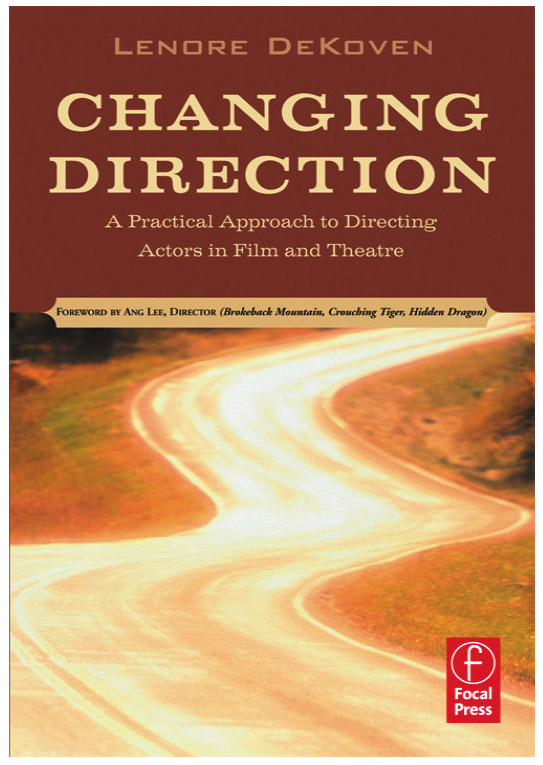
Lenore DeKoven: „Changing Direction" | book release
| Das Gespräch führte: Tina Thiele
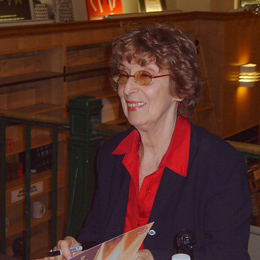
About Lenore DeKoven
Lenore DeKoven had a distinguished career in theatre, film and television. She became the first woman to direct „Another World” for NBC. She is currently an associate professor in the Graduate Film Division of Columbia University’s School of Arts and has also taught at UCLA and New York University. In addition to her teaching and directing experiences on both coasts, she has produced plays in New York and Los Angeles. She is a member of the Directors Guild of America, the League of Professional Theatre Women and is listed in Who's Who in Entertainment. Tina Thiele interviewed Lenore DeKoven for the first time in the year 2002 for her thesis. Searching for new faces. Casting in the current German cinema. Since then, the two are connected by an intensive correspondency concerning developments in film in the USA and Europe.
„The essence of Lenore’s distinctive methods, developed over many years can be found in the pages of this excellent clearly written book." (Ang Lee)
Changing Direction is a guide to directing actors based on Lenore DeKoven`s years of experience in the classroom and on set, as well as in her sought-out workshops in New York and Los Angeles. DeKoven covers everything from script to character development, rehearsals, casting and working with the camera. Changing Direction combines underlying theory together with the actor’s language and practical exercises for use in a workshop or class. Relevant to all directors and actors of TV, film and theatre this book is a valuable resource for information on constructing the plotline, analyzing the script, the process, and differences between film and theatre. Actors will refer to it for acting tips and insights into the mind of directors. Among the many names of Lenore DeKoven’s former pupils one will find Ang Lee and Kimberly Pierce, aswell. On April 4th the book was presented in the legendary Drama Bookshop in New York.
How did the idea for the book originate?
For years now my students and workshop members have been begging me to write a book about my approach to directing actors and its vocabulary. „Give us a list”, they’ ve implored. „Write us a text of the course“. I’ve successfully resisted their pleas until now, mainly because I suspected that one couldn’t get the real sense of this material from reading a book. One day a publisher rang me and asked if I would like to write a book. So I sat down and wrote my course down: I tried to give it a voice that I use as teacher. I tried to keep the language direct and simple and informal, because you need to connect very directly: you are working with creatives. You are working with creativity and so I tried to structure it like my course. So it is really my course in print including the anecdotes.
During your recitation you brought actors onstage for demonstration. Was that rehearsed?
The rehearsal? No, but I have trained those actors, too. So they know the vocabulary. Trained actors can do wonderful things. That is what directors often do not realise. If you leave actors to do their work and give them this little stimulus they can do amazing things. As a young girl – having acted by the seat of my pants since the age of 7 and having been heavily influenced by my actor father who trained at the Theatre Guild and hung out with members of the Group Theatre (perhaps opposite ends of the spectrum) - I sought various teachers who were known at the same time to be proponents of the Stanislavski approach.
In addition to my experience at the New School with Herbert Berghof, after graduating from college I moved on to Lee Strasberg and then, in slow succession, Stella Adler and others (where my classmates included Marlon Brando, Jack Lemmon and Cliff Roberston).
Which method would you consider to be a part of / do you relate to?
Picking out the best of each! You are not wearing the same pair of shoes all the time. What I did ultimately is what I advise my acting and directing students is to do: Experience as many approaches as you can; try them out, give them each your best shot, and then select that which works best for you. It is indeed a process from teacher A to teacher B and so on until you put together your own approach, tailor-made especially for you. So what evolves is your method rather than The Method (which has long since become such a hybrid as to be almost unidentifiable). My belief is that each artist should have his own method, and after I’ve shared my approach with you in its totality, I hope you will develop just as I’ve suggested: a piano is an 88 key instrument. The keys on different pianos all look the same, but each has a different touch, tone, heavy or light action, unique sound. The challenge for the director then is this process of communication with the actor is learning the actor’s instrument. How is the instrument trained? How does this actor master his craft? How can you best help the actor to arrive at the state of the character you want to see? Stated another way, how can you best gain access to the key’s of the actor’s computer / brain?
Which approach does the Columbia University have?
The Columbia University film program has a creative sort of system where we think about some concentration. There are students who prefer to concentrate on screenwriting, some on producing and others on directing. Directors learn scriptwriting, producers do casting The curriculum is designed around the concentrations the particular student wants to investigate. Finally everybody gets a knowledge about the job the other one is doing. The crossing over makes a much better understanding of what the crafts involved and with understanding there is better communication. And it is all about communication and respect!
Which department do you have the most respect for?
That is like asking which of my children I care about most. The producing of the whole thing is probably a most demanding job. In the film business we differentiate between the executive producer and the Line Producer. The first one goes up and gets the money; the second one is the one that makes sure the team is complete. This producing concentration in our program is a recent development. When I first came to Columbia - this was around 1988 - we didn’t have this effort; but it became clear how important this job is. When students began to work on their short films very often the writer was the producer, as well! They had no particular knowledge or skill of producing. This is a real agony! When you are directing you have to concentrate on it and when you are acting you have to focus on that.
Lenore DeKoven had a distinguished career in theatre, film and television. She became the first woman to direct „Another World” for NBC. She is currently an associate professor in the Graduate Film Division of Columbia University’s School of Arts and has also taught at UCLA and New York University. In addition to her teaching and directing experiences on both coasts, she has produced plays in New York and Los Angeles. She is a member of the Directors Guild of America, the League of Professional Theatre Women and is listed in Who's Who in Entertainment. Tina Thiele interviewed Lenore DeKoven for the first time in the year 2002 for her thesis. Searching for new faces. Casting in the current German cinema. Since then, the two are connected by an intensive correspondency concerning developments in film in the USA and Europe.
„The essence of Lenore’s distinctive methods, developed over many years can be found in the pages of this excellent clearly written book." (Ang Lee)
Changing Direction is a guide to directing actors based on Lenore DeKoven`s years of experience in the classroom and on set, as well as in her sought-out workshops in New York and Los Angeles. DeKoven covers everything from script to character development, rehearsals, casting and working with the camera. Changing Direction combines underlying theory together with the actor’s language and practical exercises for use in a workshop or class. Relevant to all directors and actors of TV, film and theatre this book is a valuable resource for information on constructing the plotline, analyzing the script, the process, and differences between film and theatre. Actors will refer to it for acting tips and insights into the mind of directors. Among the many names of Lenore DeKoven’s former pupils one will find Ang Lee and Kimberly Pierce, aswell. On April 4th the book was presented in the legendary Drama Bookshop in New York.
How did the idea for the book originate?
For years now my students and workshop members have been begging me to write a book about my approach to directing actors and its vocabulary. „Give us a list”, they’ ve implored. „Write us a text of the course“. I’ve successfully resisted their pleas until now, mainly because I suspected that one couldn’t get the real sense of this material from reading a book. One day a publisher rang me and asked if I would like to write a book. So I sat down and wrote my course down: I tried to give it a voice that I use as teacher. I tried to keep the language direct and simple and informal, because you need to connect very directly: you are working with creatives. You are working with creativity and so I tried to structure it like my course. So it is really my course in print including the anecdotes.
During your recitation you brought actors onstage for demonstration. Was that rehearsed?
The rehearsal? No, but I have trained those actors, too. So they know the vocabulary. Trained actors can do wonderful things. That is what directors often do not realise. If you leave actors to do their work and give them this little stimulus they can do amazing things. As a young girl – having acted by the seat of my pants since the age of 7 and having been heavily influenced by my actor father who trained at the Theatre Guild and hung out with members of the Group Theatre (perhaps opposite ends of the spectrum) - I sought various teachers who were known at the same time to be proponents of the Stanislavski approach.
In addition to my experience at the New School with Herbert Berghof, after graduating from college I moved on to Lee Strasberg and then, in slow succession, Stella Adler and others (where my classmates included Marlon Brando, Jack Lemmon and Cliff Roberston).
Which method would you consider to be a part of / do you relate to?
Picking out the best of each! You are not wearing the same pair of shoes all the time. What I did ultimately is what I advise my acting and directing students is to do: Experience as many approaches as you can; try them out, give them each your best shot, and then select that which works best for you. It is indeed a process from teacher A to teacher B and so on until you put together your own approach, tailor-made especially for you. So what evolves is your method rather than The Method (which has long since become such a hybrid as to be almost unidentifiable). My belief is that each artist should have his own method, and after I’ve shared my approach with you in its totality, I hope you will develop just as I’ve suggested: a piano is an 88 key instrument. The keys on different pianos all look the same, but each has a different touch, tone, heavy or light action, unique sound. The challenge for the director then is this process of communication with the actor is learning the actor’s instrument. How is the instrument trained? How does this actor master his craft? How can you best help the actor to arrive at the state of the character you want to see? Stated another way, how can you best gain access to the key’s of the actor’s computer / brain?
Which approach does the Columbia University have?
The Columbia University film program has a creative sort of system where we think about some concentration. There are students who prefer to concentrate on screenwriting, some on producing and others on directing. Directors learn scriptwriting, producers do casting The curriculum is designed around the concentrations the particular student wants to investigate. Finally everybody gets a knowledge about the job the other one is doing. The crossing over makes a much better understanding of what the crafts involved and with understanding there is better communication. And it is all about communication and respect!
Which department do you have the most respect for?
That is like asking which of my children I care about most. The producing of the whole thing is probably a most demanding job. In the film business we differentiate between the executive producer and the Line Producer. The first one goes up and gets the money; the second one is the one that makes sure the team is complete. This producing concentration in our program is a recent development. When I first came to Columbia - this was around 1988 - we didn’t have this effort; but it became clear how important this job is. When students began to work on their short films very often the writer was the producer, as well! They had no particular knowledge or skill of producing. This is a real agony! When you are directing you have to concentrate on it and when you are acting you have to focus on that.
What do you appreciate most at Columbia?
One of the things I like about Columbia in general is that they supply their faculty with professionals. In other schools you get your undergraduate, your degree and then your masters and then you get hired outside but you stay inside as teacher. So you never really leave. 98 % of all our teachers are professionals, when they have to shoot they take a leave. In our profession I think that experience in the actual reality of working is essential. This is terribly important, actually. I often tell students to go and volunteer, work on sets, because they learn so much just by watching. We are very fortunate to have Ira Deutchman for the producing discipline. He has been making, marketing and distributing films for twenty-seven years, having worked on over 130 films including some of the most successful independent films of all time: Jane Campion's „An Angel at My Table”, Gus van Sant's „My Own Private Idaho”, Jim Jarmusch's „Night on Earth”, Robert Altman's „The Player” and „Short Cuts”, Roman Polanski's „Bitter Moon” and „Death and the Maiden”.
Who else belongs to the team of professors?
James Schamus who is teaching history theory criticism from a producer’s point of view. He is an Academy Award-nominated screenwriter, producer, and film executive. His long collaboration as writer and producer for Ang Lee has resulted in eight films, including „Brokeback Mountain”, „Crouching Tiger, Hidden Dragon”, „The Ice Storm”, „The Wedding Banquet” and „The Hulk”. As co-president of Focus Features, Schamus oversees the finance, production, and distribution of numerous films, including 2002's Oscar winner: „The Pianist”. Another Oscar winner, who is teaching at Columbia is Philip Seymour Hoffman. He played the role of Truman Capote in the 2006 film „Capote” for which he won many awards. He has been an actor for stage and screen for 20 years, as well as an excellent stage director. Barbara De Fina was the executive producer of „GoodFellas” which received an Academy Award nomination for Best Picture in 1990, and has produced Martin Scorsese's „Bringing Out the Dead”, „Kundun”, „Casino”, „Cape Fear” as well as Michael Jackson's music video „Bad”. This is very valuable.
Of the 300 prenominated Oscar-movies once again merely 20 were from female directors! How are the proportions in the profession of producers?
That is the interesting thing. That happens! There have been quite a few female heads of studios. But they still have to raise money and this does not come in with women directors at hand. And also the women who have been producers or even head of a studio have not been very fond of hiring other women for whatever reason. Either they want to protect their position or they find it too difficult to get the support in order to hire more women. However, a couple of women made it possible for these twenty female directors. An example: One of my former student was a writer and actor. Now she is a producer and a very successful one. She just produced a picture for young kids called „Aquamarine” with Julia Robert`s niece who is one of the little acting stars. The writer as well as the director and the rest of the team are women.
Why is it so important to you that women direct and / or produce?
It is not the quota. I do not think that we need women simply to look good and be politically correct. I am training the women -no matter in what area- to create for a balanced perspective of life. I would say with certain kind of material it is really interesting to have women. Kimberly Pierce was really the right one for „Boy`s don`t cry”. That does not mean that Ang Lee wouldn't be good as well. On the other hand „Brokeback Mountain” directed by Kimberly Pierce would be a completely different movie; as it would if Steven Spielberg would have been the director. The point is that it is not so necessary to choose women directors because of their sex, but what is necessary is to give our youth growing up an alternative view of our culture, human beings and human behaviour and if they always get it from a male perspective they are not getting a balanced view.
Which problems usually come up when a director works with actors for the first time?
It all depends on how the relationship begins. If it has begun in a „You are working for me and I am the authority”-relationship then you are simply a hired hand like a secretary: You have to work for a boss. Then it is really negative. Alternative: You put your part in and I put mine in and at the end we maybe will have created art. If everybody wants to make this piece of art it is a question of “let’s come together and join, figure out what we can develop together”. Trust is really important. What the actor feels: “I am out there. On the screen. Will you take care of me?” This is also the difference between film and theatre. A lot is similar, but the difference in theatre is that it is not captured. It is allowed to be dynamic! The writer has more to say in theatre. The whole collobaration is on a slightly different level. In the filming process once the camera has captured the scene; it is in the camera and it then goes to the editor. The actor has very little control over the finished product. That is the big difference.
Have you received feedback from your pupils for the book yet?
They say they are very grateful. It is funny, I had my workshop last night and a couple of my people were sitting there with the book in their hands and were quoting things to me: „well you said here…" Of course there was a certain unwillingness on my part to take on the challenge of attempting to write down a process by which one might arrive at something so dynamic, ephemeral, flexible, constantly adjusting and changing as the recreation of life on paper. How does one painstakingly describe in prose the betraying twitch of a muscle, the revealing physical response to an emotion, or the unexpected reaction of a querulous actor? As I am more director than writer, the prospect of attempting to make my approach clear while adhering to my strong belief that shorter is better in most forms of communication, seemed ominous.
What is your next project?
A student asked me when I will be writing down my memoires... No! I have done my work as an author. I'd like to get back to directing.
Thank you so much, Lenore!
By the way: It is planned for the book to be translated into German
Anhänge
changingdirection.jpg
131.0 KB
© Zum Buchcover
Download